

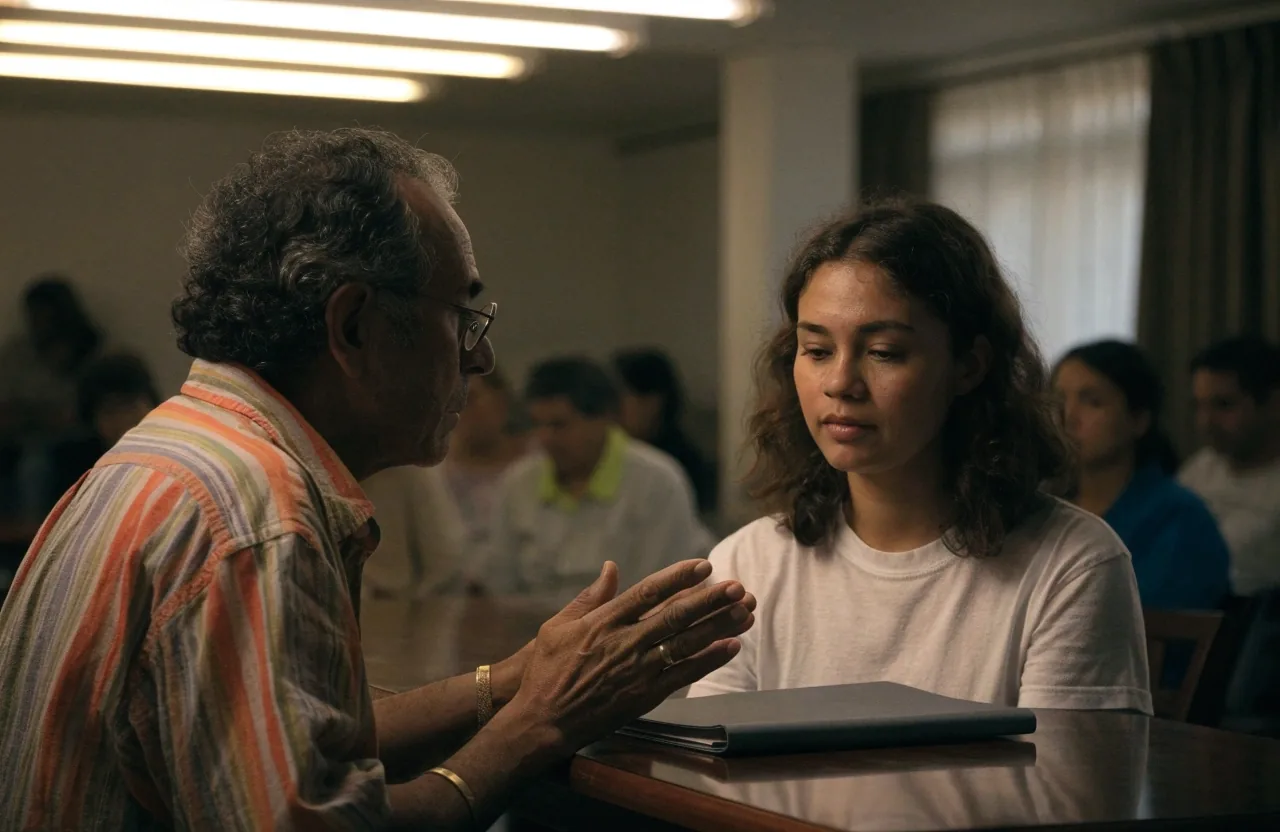
A father reviewing paperwork with a caseworker at a community center table

A Fathers Hope · Los Angeles, California

Resources for California fathers

This page collects trusted fatherhood resources, county programs, and support networks across California. It is organized by what you need rather than by agency name, because most fathers start with a problem, not a program. Use it to find services near you, then contact us if you cannot find what you are looking for.

How to use this directory

Every county in California has some version of a father resource list, and none of them is complete. Resources for Fathers in San Diego County is presented through the county health and human services system and described as a partial list of resources for dads in the community; it includes Paternal Opportunities Programs & Services (POPS). That is the honest state of things.

Start with your county, then ask for a referral

Start with your county's list, then ask a program what they refer to when they cannot help. Referral networks are often better than directories. A staff member who works the phones every day knows who actually answers, who has intake openings this month, and which office will turn you away for the wrong form.

Know which system your question belongs to

Child support and custody are separate systems in California, which surprises many fathers. A support order does not decide custody, and a custody order does not set support. Decide which one your question belongs to before you make the call — it saves a week of being bounced between two offices that each think the other one handles it.

If you cannot tell where to start, write down three things: your county, what you need in the next thirty days, and any court date already on the calendar. Those three answers narrow the list to two or three real options.

Referral networks are often better than directories.

A directory tells you a program exists. A person inside the system tells you whether it is taking new fathers this month, what the intake form actually requires, and who to call when the front desk says no.

State child-support resources

California Child Support Services Empowering Fathers is a state resource focused specifically on fathers and children, and it frames father involvement as vital to children's lives. It is the right starting point for questions about establishing paternity, modifying an order, or understanding what a support order actually requires.

Establishing paternity

If your name is not on the birth certificate or a voluntary declaration was never signed, paternity has to be established before most other steps make sense. The state office handles this at no cost to either parent, and either parent can open the case. Bring whatever identification and paperwork you have; incomplete documents do not stop the process from starting.

Modifying an existing order

Orders can be changed when income, childcare costs, or the amount of time a child spends with each parent changes. You generally need to show what changed and when. Keep pay stubs, a layoff notice, or a new custody schedule on hand — the modification request moves faster when the change is documented rather than described.

Understanding what an order requires

A support order states an amount, a payment schedule, and how the money is collected. It does not say when you see your child. Read the order for the payment terms only, and take custody questions to family court — mixing the two in one phone call is the most common reason fathers get sent back to the start.

Child support and custody are separate

A support order does not decide custody, and a custody order does not set support. Fathers often assume one filing covers both. It does not. Know which one your question belongs to before you call, and you will spend your time on the right queue instead of the wrong one.

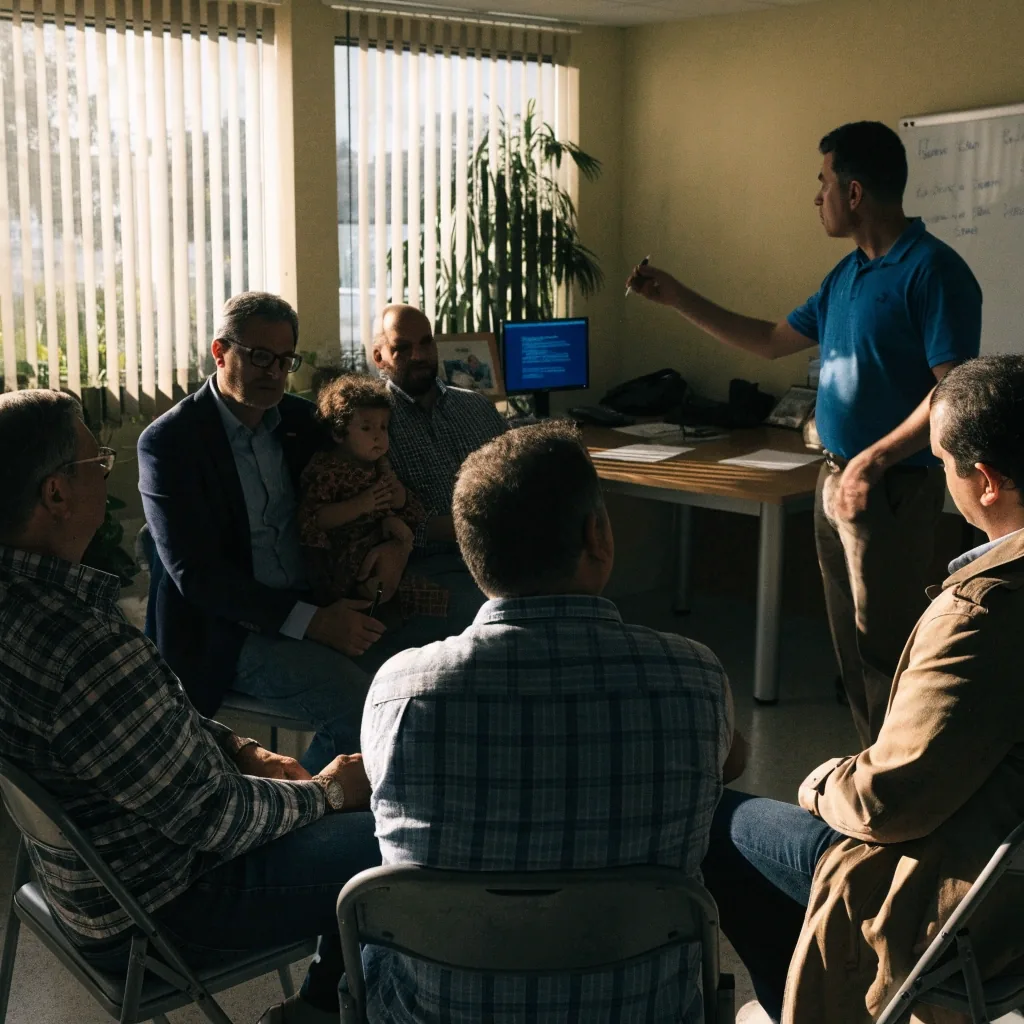
A fatherhood parent education group meeting in a county public health office

County fatherhood programs

Counties run fatherhood programs through public health departments, and they vary widely in what they offer. Some are case management only. Some run weekly groups with childcare on site. A few cover transportation. The list below is a starting point, not a complete map of California.

Alameda County

Alameda County Fatherhood Initiative

Established in 2012, the Initiative focuses on responsible fatherhood and healthy relationships. It offers father-centered case management, care coordination, and parent education groups. Fathers are assigned a worker who stays with the case rather than routing them through a general intake line, which is what makes it different from a county call center.

Sonoma County

Fathers and Partners in Parenting

A Sonoma County public-health parenting resource, part of Maternal, Child, and Adolescent Health services. It includes fathers and partners in parenting support, which matters for fathers raising a child with a partner who is not the biological parent, and for grandparents and relatives who have stepped into a parenting role.

If your county is not listed here, contact us and we will help you find the equivalent. Tell us your county and what you need. County programs are usually funded through public health rather than courts, so the fastest way in is often the health department rather than the family law side of the county website.

A father speaking at a microphone during a county agency community meeting

Father advocacy networks raise the intake form, the group schedule, and the staff training issues that keep fathers out of services.

Father advocacy networks

Some of the most useful work is done by networks that push institutions to change. Alameda County Fathers Corps, run through First 5 Alameda County, has partnered with county agencies since 2013 and serves fathers and father-figures in the county while advocating for father-friendly services.

These networks matter when a system is not working. They are the ones raising the intake form, the group schedule, and the staff training issues. If you hit a wall with an agency, a father advocacy network is worth contacting — not because they can override a decision, but because they know which office has already agreed to fix the problem and who inside it to reach.

What to say when you reach out

Name the agency, the office, and the date you were turned away. Describe what you were told, not what you assumed. Advocacy groups work on patterns — one complaint rarely moves a policy, but five fathers describing the same intake barrier at the same office usually does.

Legal consultations and family court help

Dads Evoking Change, an Oakland-based nonprofit with EIN 83-3068380, offers legal consultations for fathers on co-parenting, child custody, and family-court processes. Legal clinics like this are usually free or low cost, and they book out weeks ahead.

What to bring

Bring any court paperwork you have, even if it is incomplete. A partial order, a hearing notice, or a text message about a schedule change all help the attorney see where your case actually stands.

A father reviewing family court documents with a legal aid volunteer at a community clinic

Preparing for a hearing

If you are preparing for a hearing, our Co-Parenting & Family Court Guide covers the structure of California custody, parenting plans, and how to present your situation clearly. It walks through what a judge is looking for and how to keep the conversation on the schedule and the child rather than on the other parent.

Read the co-parenting and family court guide

Support groups and peer networks

Peer groups exist in most California counties, but they are poorly indexed online. The reliable way to find one is to ask a program, a county office, or another father. Alameda County Fathers Corps serves fathers and father-figures and is a good model for what these networks look like.

Ask a program you already use

Case managers usually know which group meets on which night. It is the fastest route and the one least likely to send you to a room that is empty.

Ask another father

The most current information on a group often comes from someone who attends it. Groups move locations and change times without updating a website.

If you want a group near you, send us your county and we will tell you what is running and when.

Send us your county

Reentry and workforce resources

Fathers returning from incarceration often need work and financial stability before parenting support can take hold. A father who is couch-surfing and cannot cover a phone bill is not in a position to build a visitation schedule, no matter how motivated he is. The order matters.

Fathers To Founders

A San Francisco nonprofit listed on Idealist that focuses on underserved and reentry fathers, with workforce development, financial literacy, and reentry services. It mentions projects such as the Fathers Reconnected Project and the Dad Politics Podcast.

What to ask a reentry program

Ask reentry programs about father-specific services, not just job placement. The two are increasingly combined. Ask whether the program has a family reunification worker, whether it helps with a driver's license, and whether it will write a letter for a custody hearing.

A father standing on the porch of a Los Angeles apartment building at dusk

If you cannot find what you need

Directories go stale. Programs close, phone numbers change, and intake rules shift. If a listing here does not work, tell us and we will help you find an alternative, and we will update the page. Send us your county and a sentence about what you need.

If you are in immediate danger or a child is at risk, call 911 rather than using this page. This directory is for planning and referrals, not emergencies.

Questions fathers ask

Short answers to the three things that come up most often when fathers start working through this list.

Where can fathers find support groups or peer networks near them?

Start with your county resource list, then ask a program what they refer to. Resources for Fathers in San Diego County, presented through the county health and human services system, includes Paternal Opportunities Programs & Services (POPS), though the county describes it as a partial list. You can also contact us with your county and we will tell you what is running.

How do fatherhood programs connect to child support and family court?

They help you navigate both, but they are separate systems. California Child Support Services Empowering Fathers covers paternity, support orders, and modifications. Custody and parenting plans go through family court. Programs like Dads Evoking Change offer legal consultations on custody and family-court processes specifically.

Are these resources free?

Many county and nonprofit fatherhood services are free or low cost. Some legal consultations and workforce programs have eligibility rules. Ask each program directly about cost and eligibility before you book — the answer varies by county and by program, and it is better to know before you take a day off work.

Who publishes this directory

A Fathers Hope is a nonprofit supporting fathers and families, registered in California, USA, as a Nonprofit Public Benefit Corporation. The organization provides educational resources, fatherhood programs, and family support guidance for fathers and families in Los Angeles and across California. This page is one of those resources — it exists so a father does not have to guess which office to call first.

Organization

A Fathers Hope, a Nonprofit Public Benefit Corporation registered in California.

Registered agent

Andrew Croft, registered agent for the corporation in the State of California.

Document number

B20250291541 — the California entity document number for A Fathers Hope.

Reach us

4125 S Leimert Blvd, Unit 1, Los Angeles, CA 90008, USA. Monday to Friday, 9:00 AM to 6:00 PM. If you prefer email, write to [email protected] with your county and a sentence about what you need.

Next step

Pick the chapter above that matches your situation. If two of them seem to apply, start with the one tied to a date on your calendar — a hearing, an intake appointment, or a support payment.