
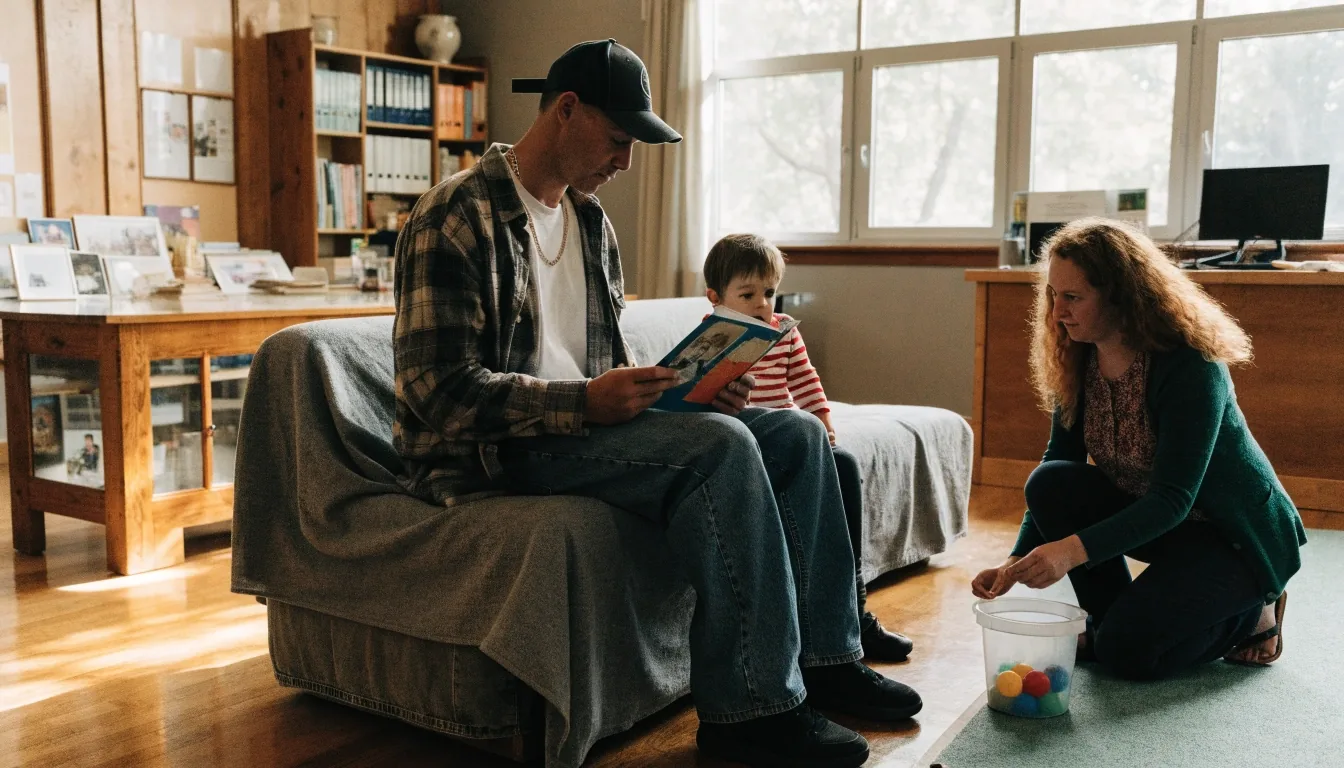
A California nonprofit public benefit corporation
A Fathers Hope supports California fathers
The services exist. What is missing is someone telling you which door to knock on first. We gather fatherhood programs, parent education, co-parenting guidance, and county resources into one place you can use.
Start with the door that fits your situation
Most fathers looking for help run into the same problem: the services exist, but nobody explains which one to call first. A Fathers Hope is a California nonprofit public benefit corporation that gathers fatherhood programs, parent education, co-parenting guidance, and county-level resources into one place you can actually use.
We work with fathers and families in Los Angeles and across California, whether you are raising a child full time, co-parenting after a separation, or trying to rebuild a relationship with your kids. Nothing here requires you to have your situation sorted out before you reach out.
Three questions that save weeks
- Do they serve fathers specifically, or parents in general?
- Will I get an assigned case manager, or a class schedule?
- What happens in the first session, and who calls back if I miss a week?
If a program cannot answer all three, keep calling. The answers are a better signal than any mission statement.
Fathers come in for a custody question and stay for a weekly group. Or the reverse.
That is what the work looks like in practice: parent education, care coordination, and peer support running side by side, not one service handing out tips and hanging up.
What a fatherhood nonprofit actually does
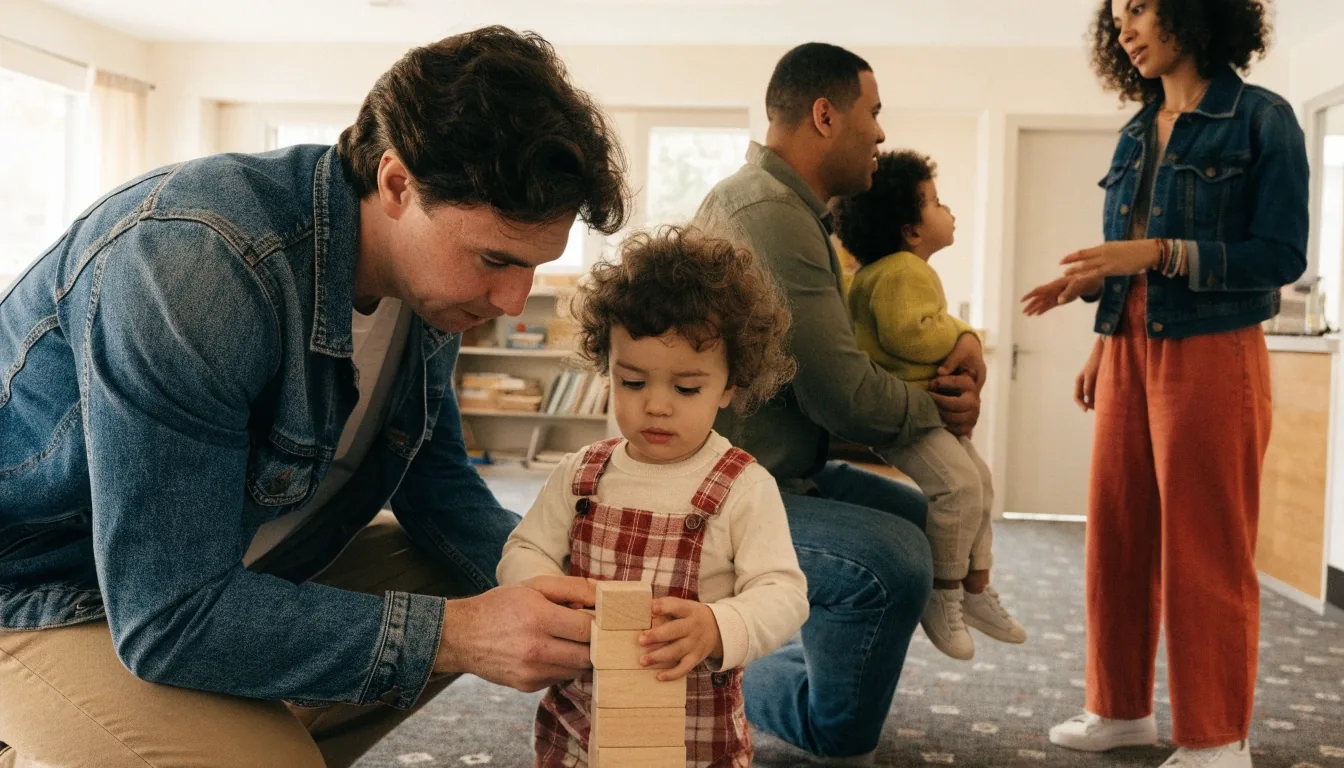
A fatherhood nonprofit is not a hotline that hands out parenting tips and hangs up. The work usually combines three things: parent education, care coordination, and peer support. Fathers come in for one and stay for another.
Alameda County Fatherhood Initiative, established in 2012, runs father-centered case management and parent education groups as a county public-health program. Dads Evoking Change, an Oakland-based nonprofit with EIN 83-3068380, offers legal consultations for fathers on co-parenting, child custody, and family-court processes, plus virtual counseling sessions for mothers and fathers.
Parent education
Structured groups and classes on child development, discipline, communication, and the daily work of parenting. Often weekly, often free.
Care coordination
One person assigned to your situation who follows up, connects you to legal help, housing, or child support questions, and stays on it.
Peer support
Groups of fathers at the same stage, meeting on a fixed schedule. The part fathers tend to say kept them coming back.
Programs you can join
Our own programs mirror what works elsewhere in the state: parent education, co-parenting support, care coordination, and connections to legal and family-court navigation. Co-parenting support shows up in nearly every father-support program in California for a reason. It is the topic fathers ask about most, and it is usually delivered through groups, counseling, or one-on-one consultations.
You do not need a court order to ask for help. You do not need to be behind on child support. If you are a father, a father-figure, or a partner who is raising a child, there is a program here for you.
Every program listing on the Programs page says who it is for, when it meets, and how to ask for it.
How California counties fit in
California has an unusual patchwork of fatherhood support, and it changes where you go for what. Counties run public-health programs. The state runs child-support systems. Nonprofits run peer groups and legal clinics.
Fathers and Partners in Parenting is a Sonoma County public-health parenting resource, part of Maternal, Child, and Adolescent Health services, and it includes fathers and partners as part of parenting support. California Child Support Services Empowering Fathers is a state resource that frames father involvement as important to children's lives. Neither replaces the other, and neither replaces a local nonprofit. Knowing which system owns which problem saves weeks.
Father-friendly services and why the label matters
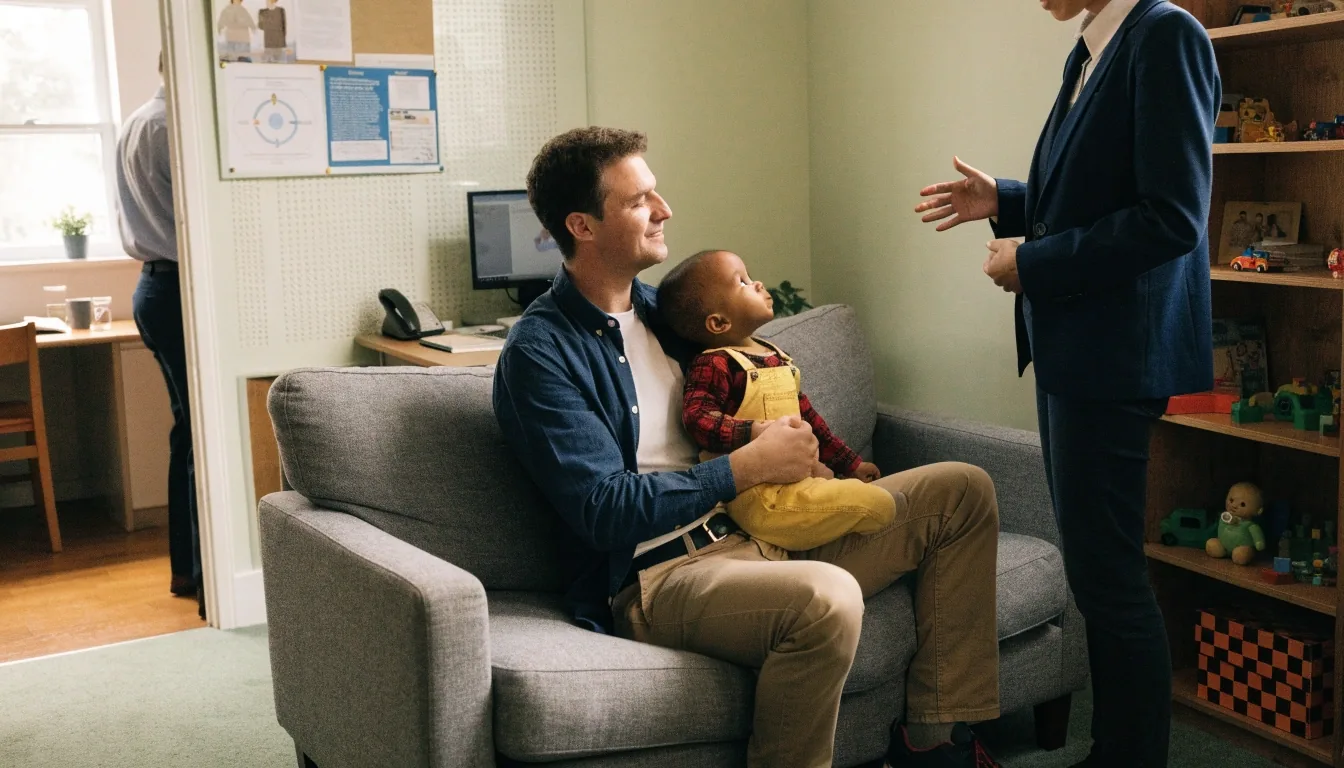
Father-friendly is not a slogan. It describes a service that expects fathers to show up and treats them as a parent rather than a problem. Alameda County Fathers Corps, run through First 5 Alameda County and partnered with county agencies since 2013, serves fathers and father-figures in the county and advocates for father-friendly services across institutions.
That advocacy is slow work: training staff, changing intake forms, adjusting group times so a father working swing shift can attend. When you call a program, ask two questions. Do they serve fathers specifically, and can they name a father who has used the service.
- Group times that fit shift work, not just weekday mornings.
- Intake that asks about your role as a parent, not your case number.
- Staff who can name fathers who have used the service.
Co-parenting and family court, in plain terms
Co-parenting is the arrangement most California fathers are actually navigating, and it is the one with the least clear guidance. Custody, visitation schedules, and communication rules get decided in family court, but the day-to-day reality is negotiated between two people who may not agree on much.
Programs that pair legal consultations with counseling tend to work better than either alone, because the legal answer and the emotional answer are rarely the same. Our guide walks through the basics: how custody is structured in California, what a parenting plan covers, and how to prepare for a hearing without a lawyer. Read it before your first court date, not after.
Read the co-parenting and family court guideWhat the guide covers
- How California structures custody and visitation
- What belongs in a parenting plan
- Preparing for a hearing without a lawyer
- Where legal clinics and counseling meet
Finding local resources without starting over
Every county in California has some version of a father resource list, and the quality varies. Resources for Fathers in San Diego County is presented through the county health and human services system and described as a partial list of resources for dads in the community; it includes Paternal Opportunities Programs & Services (POPS).
Partial is the honest word. No single directory covers everything. That is why our Resources page organizes by county and by need, so you can see what exists near you and what to ask for when you call. If a listing is out of date, tell us. We update it.
Find resources in your county
When fatherhood support connects to work and reentry
Fatherhood programs increasingly overlap with economic stability, because a father who cannot find work has a harder time showing up as a parent. Fathers To Founders is a San Francisco nonprofit listed on Idealist that focuses on underserved and reentry fathers, and its work includes workforce development, financial literacy, and reentry services. It mentions projects such as the Fathers Reconnected Project and the Dad Politics Podcast.
That combination is not unusual in the Bay Area and it is growing in Los Angeles. If you are returning from incarceration or looking for work, ask a program about workforce and financial services, not just parenting classes. The parenting work goes further when the rent is paid.
What separates a useful program from a thin one
The difference is rarely the mission statement. Programs that work tend to have a named staff contact, a fixed meeting time, and a clear answer to what happens in the first session. Programs that stall send you to voicemail.
| What to check | A program that works | A program that stalls |
|---|---|---|
| First contact | A named staff member answers and explains the first session | Voicemail, and no call back |
| Schedule | A fixed meeting time published in advance | Meeting times change or never get confirmed |
| Follow-up | Someone assigned to your situation follows up if you miss a week | You start over with a new person each time |
| Scope | Case management plus referrals to legal, housing, or work help | One class, then no further route |
Alameda County Fatherhood Initiative delivers case management and care coordination, which means someone is assigned to your situation and follows up. That is the marker to look for.
Parent education, early childhood, and family engagement
Parent education in California is not only for fathers in crisis. Family engagement and early childhood development programs work with parents from pregnancy onward, and they include fathers on purpose because the research on child outcomes points the same direction.
Fathers and Partners in Parenting is built around physical, social, and emotional well-being for families, with fathers and partners included in the parenting support. If you have a child under five, ask specifically about early childhood programs in your county. They often have shorter waitlists than custody-related services, so they are a good place to start even when your main question is about custody.
Common mistakes fathers make when asking for help
Waiting for the court date
Most legal clinics book further out than two weeks. Call when the question appears, not when the hearing does.
Calling the wrong office
A child-support office handles support. A custody clinic handles custody. Mixing them up costs a week or more.
Ruling yourself out
Many California programs serve father-figures and fathers without formal custody or a birth certificate line. Ask about eligibility before you assume.
How to start this week
Pick one thing. Then contact us and tell us your county and what you are dealing with. We will point you to the program or agency that handles it.
Questions fathers ask before they call
What services do fatherhood nonprofits actually provide beyond parenting advice?
Most combine parent education with care coordination, peer support groups, and legal navigation. Dads Evoking Change, for example, offers legal consultations on co-parenting, child custody, and family-court processes alongside virtual counseling. Alameda County Fatherhood Initiative provides father-centered case management and parent education groups. The advice is only one part.
What is the difference between a nonprofit fatherhood program and a government fatherhood initiative?
Government initiatives sit inside public agencies and are funded and staffed accordingly, which usually means stable case management but slower intake. Alameda County Fatherhood Initiative is a county public-health program; Alameda County Fathers Corps runs through First 5 Alameda County. Nonprofits tend to move faster on peer groups and legal clinics. Many fathers use both.
Where can fathers find support groups or peer networks near them?
Start with your county's resource list. Resources for Fathers in San Diego County is presented through the county health and human services system and includes Paternal Opportunities Programs & Services (POPS), though the county describes it as a partial list. Our Resources page organizes options by county and need.
Do I need custody or a court order to get help?
No. Many California fatherhood programs serve fathers and father-figures regardless of formal custody status. Ask about eligibility when you call, because rules differ by program and by county.
About the organization
A Fathers Hope is a nonprofit supporting fathers and families, registered in California, USA. We are a nonprofit public benefit corporation, and our California entity document number is B20250291541. Our registered agent is Andrew Croft.
More about our mission and corporate status is on the About page. If you are a father, a father-figure, or a partner raising a child, you are the reason this organization exists.
Read about A Fathers Hope- Organization
- A Fathers Hope, nonprofit public benefit corporation
- Registered in
- California, USA
- Registered agent
- Andrew Croft
- Entity document number
- B20250291541
- Office
- 4125 S Leimert Blvd, Unit 1, Los Angeles, CA 90008, USA
- Phone
- +1 217-536-8176
- [email protected]
- Hours
- Monday–Friday, 9:00 AM – 6:00 PM

Tell us your county and what you are dealing with
We will point you to the program or agency that handles it. You do not need to have your situation sorted out to reach out, and you do not need a court order or a custody arrangement to ask.
4125 S Leimert Blvd, Unit 1, Los Angeles, CA 90008 · Monday–Friday, 9:00 AM – 6:00 PM